Choosing Tattoo Styles at Our Middletown RI Shop
If you’ve ever scrolled through tattoo inspiration and felt more confused than inspired, you’re not alone. “Fine line” and “fine art” get used interchangeably. “Traditional” can mean five different things depending on who’s talking. And half the terms thrown around on Pinterest don’t map to anything an actual artist can execute.
So we’re starting this blog by clearing that up — walking through the styles we tattoo most often at Rocky Shores Tattoo Co., what makes each one distinct, and how to figure out which one fits the idea you’re carrying around.
We’re an artist-owned tattoo shop on Aquidneck Island, built around maritime tattoo history and a genuine love of the craft. Whatever style you land on, that’s the sensibility it comes through.
American Traditional
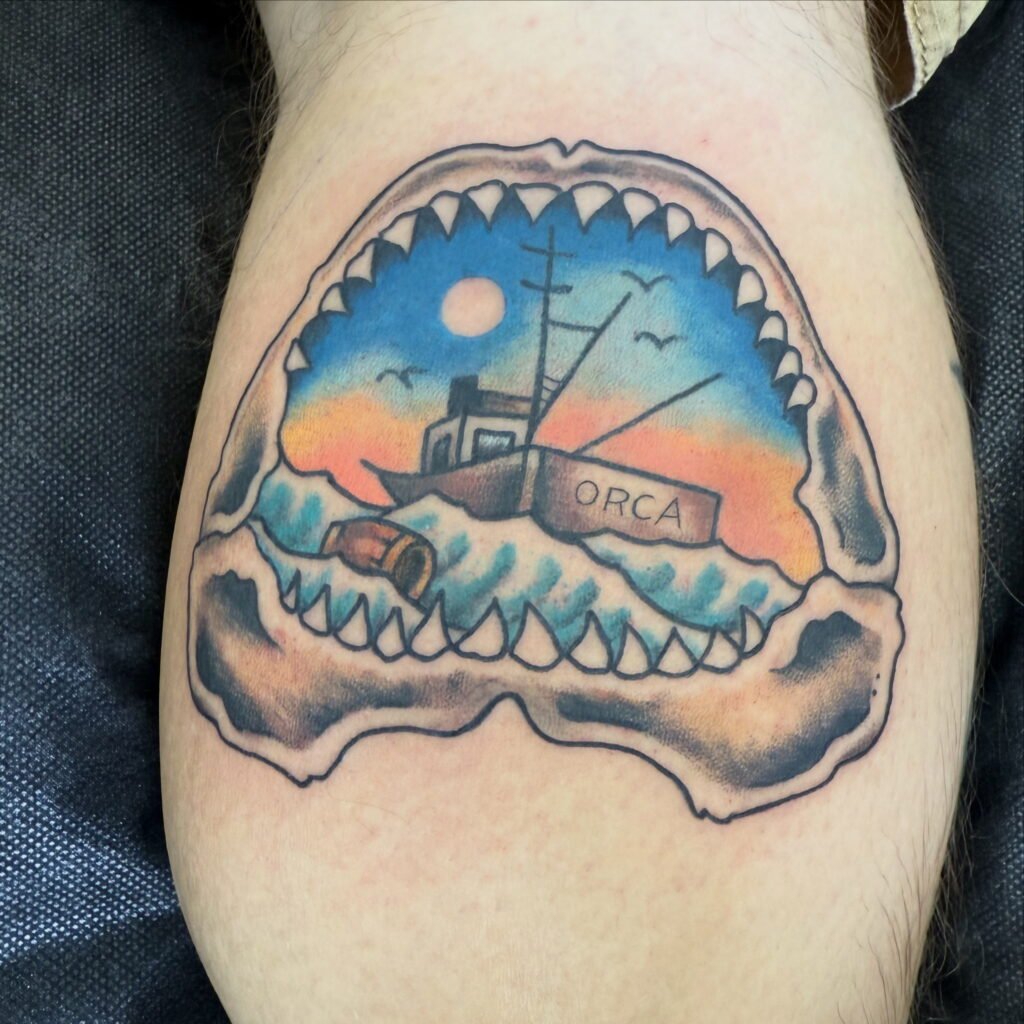
This is the style tattooing was built on: bold black outlines, a limited but punchy color palette, and imagery designed to hold up for decades — anchors, swallows, roses, ships, pin-ups. Given our location on the Rhode Island coast, American Traditional feels especially at home here. It’s the style with the deepest roots in maritime tattoo culture, and it’s built for longevity — the thick lines and solid color fills age better than almost anything else on skin.
Good fit if: you want something bold, classic, and unmistakably a tattoo — not an illustration that happens to be on your arm.
Black & Grey
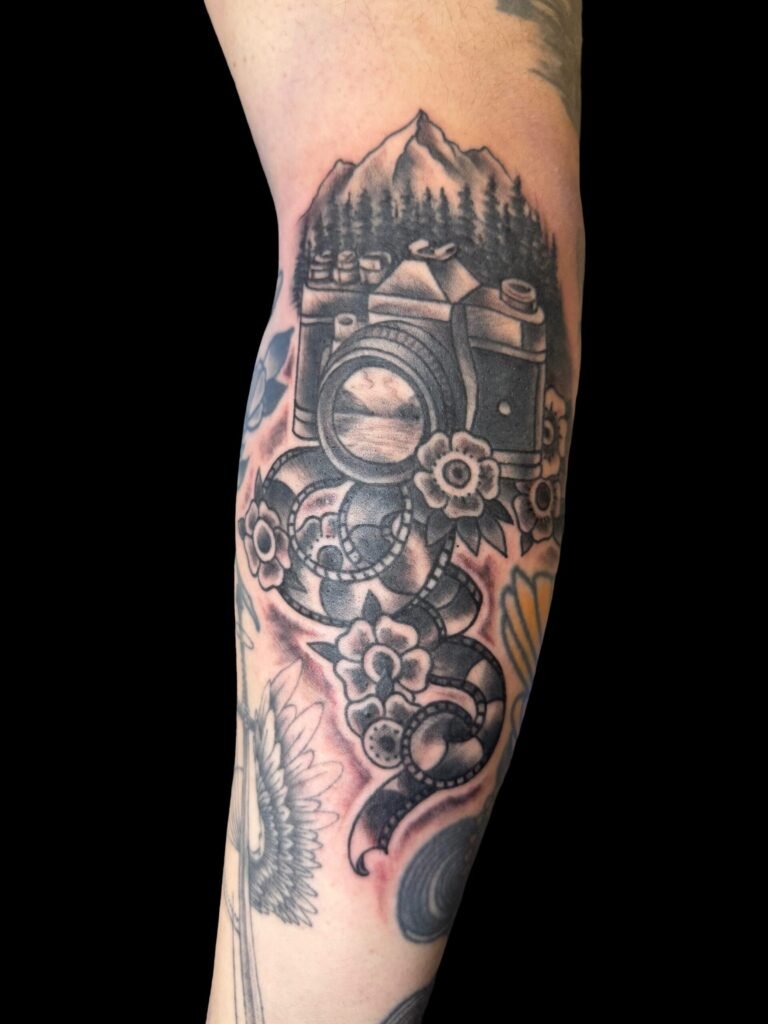
Black & grey trades color for depth — shading, contrast, and gradient work that can render anything from a hyperrealistic portrait to a moody, atmospheric piece. It’s a broad category, but the throughline is technical control: this style lives or dies on the artist’s ability to build value and texture with a single tone.
Good fit if: you’re drawn to realism, want something with more visual complexity, or prefer a subtler palette than traditional color work.
Fine Line
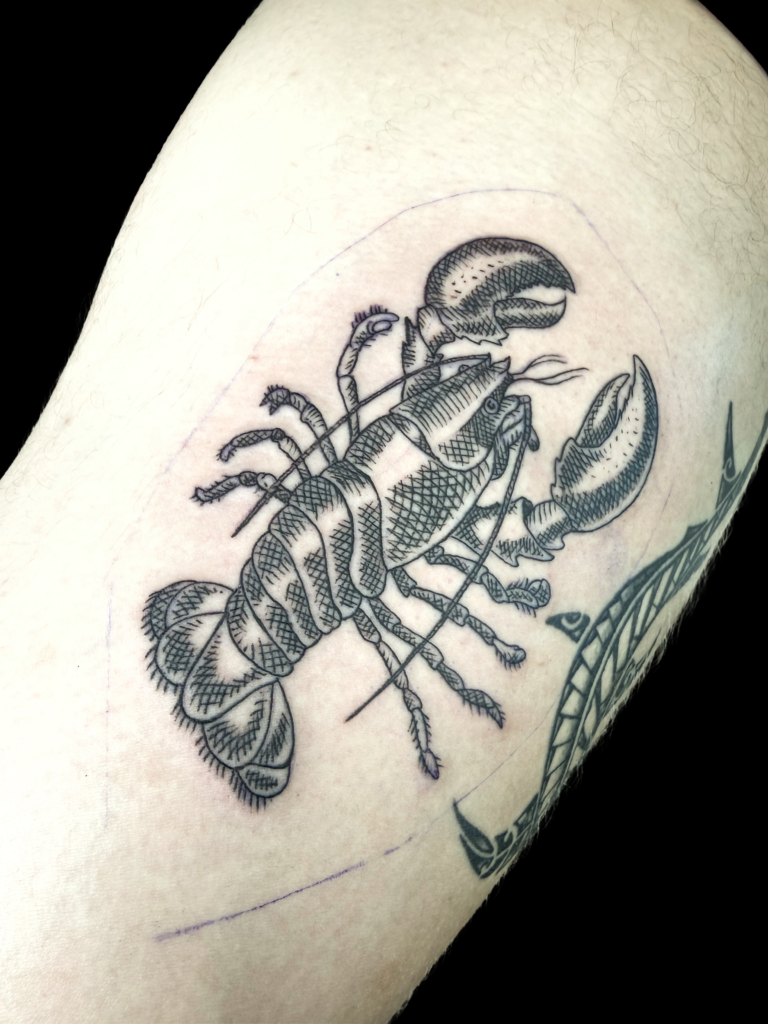
Fine line uses thin, precise needlework to create delicate, minimalist designs — small florals, script, single-needle portraits, tiny symbols with outsized meaning. It’s become one of the most requested styles in tattooing over the last several years, partly because it reads as understated and partly because it’s genuinely versatile: fine line can be a first tattoo or a twentieth.
Good fit if: you want something small, detailed, and quiet rather than a statement piece.
Worth knowing: fine line ages differently than bold linework. It’s a great style — just talk to your artist about placement and long-term care so it holds up the way you want.
Realism & Nature
This is where botanical, animal, and landscape imagery come to life — often blended with black & grey or color techniques to capture texture, light, and dimension. Realism asks a lot of an artist: proportion, shading, and reference work all have to land correctly for the piece to feel alive instead of flat.
Good fit if: you have a specific image in mind — a pet, a place, a plant — and want it rendered with real depth.
Blackwork
Blackwork covers everything from bold geometric patterns to dense, all-black illustrative pieces and large-scale coverage work. It’s graphic, high-contrast, and unapologetically strong — the opposite of subtle, in the best way.
Good fit if: you want serious visual impact, are working on a coverage or sleeve, or gravitate toward pattern and symmetry.
Bold Color
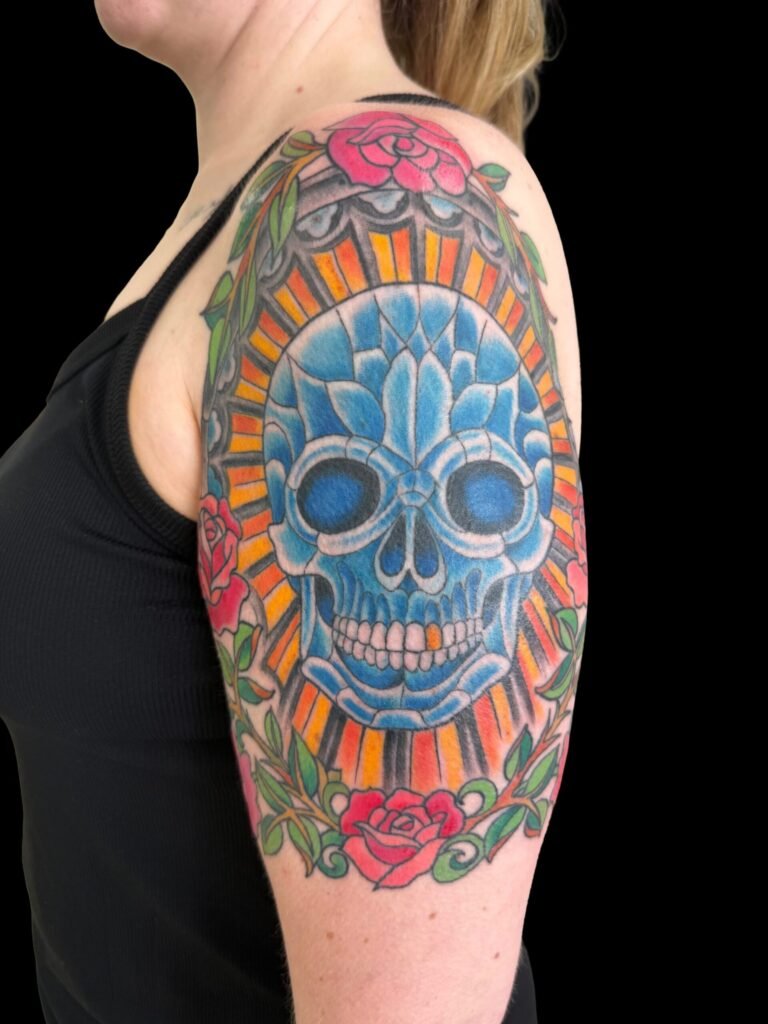
Vivid, saturated color work built for pieces designed to pop — think bold traditional-adjacent color, illustrative color pieces, and anything meant to be seen from across the room. This style takes the boldness of American Traditional and pushes the palette further.
Good fit if: color is non-negotiable and you want a piece with real presence.
How to Actually Choose
Most people don’t walk in knowing the technical term for what they want — and that’s fine. The style names matter less than the conversation. A few things that help before your consultation:
- Save reference images, even loosely. Screenshots of tattoos you like (or don’t) tell an artist more than a verbal description alone.
- Think about placement early. Some styles — fine line especially — are more placement-sensitive than others.
- Ask about longevity. Every style ages differently. A good artist will talk you through how your piece will look in ten years, not just on day one.
- Don’t force a style onto an idea that wants a different one. A detailed nature scene rarely works as fine line; a single word rarely needs full color. Part of what a consultation is for is matching the idea to the right technique.
Book a Consultation
Every piece we do — whatever the style — starts with a conversation. If you’ve got an idea (or just a vague feeling and a Pinterest board), reach out and we’ll help you figure out the right direction.
Book a consultation with Jen Beirola at Rocky Shores Tattoo Co. now.
Rocky Shores Tattoo Co. is located at 554 W Main Road, Middletown, RI, serving clients across Aquidneck Island, Newport, and the greater Rhode Island coast. Book a consultation or browse the full gallery to see recent work in every style above.
No. Most clients come in with an idea or reference images rather than a specific style name — matching the idea to the right technique is part of the consultation.
Bold linework styles like American Traditional and blackwork tend to age the best over time, since thick lines and solid fills hold up better than fine detail as skin changes.
54 W Main Road, Middletown, RI, serving Aquidneck Island and the greater Newport area.